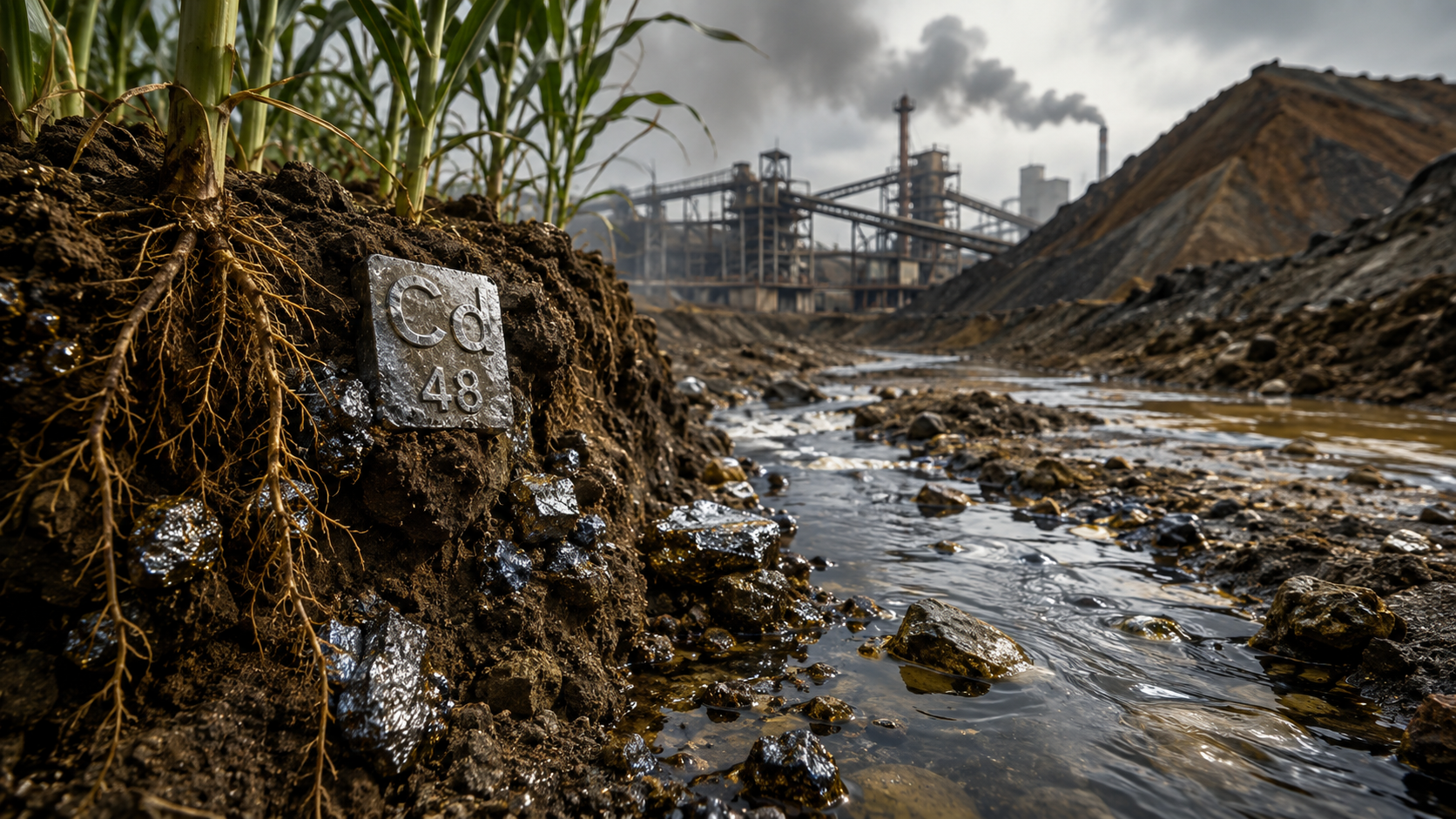
Cadmium pollution is an environmental concern because this toxic metal can enter soil and water, be absorbed by living organisms, and eventually reach the human food chain.
Unlike organic pollutants that may decompose over time, cadmium is a chemical element. Once released into the environment, it can persist unless it is physically removed, immobilized, or otherwise managed.
Mining, metal processing, industrial emissions, waste, and certain agricultural inputs can all contribute to the movement of cadmium through the environment.
How Does Cadmium Enter the Environment?
Cadmium exists naturally in the Earth’s crust and can be released through natural processes such as rock weathering and volcanic activity.
Human activities, however, can significantly alter its environmental distribution.
Potential anthropogenic sources include:
- Mining
- Zinc, lead, and copper processing
- Metal smelting and refining
- Fossil-fuel combustion
- Waste incineration
- Battery disposal
- Electronic waste
- Industrial emissions
- Certain fertilizers and agricultural inputs
Industrial activity can concentrate cadmium that was previously dispersed in geological materials and introduce it into environments where organisms can encounter it more easily.
Cadmium Contamination in Soil
Soil is an important environmental reservoir for cadmium.
Cadmium released through atmospheric deposition, industrial waste, mining activities, contaminated water, or agricultural practices can accumulate in soil.
Its behavior depends strongly on soil conditions. Factors such as pH, organic matter, mineral composition, and other chemical characteristics can influence how mobile and biologically available cadmium becomes.
This distinction is important because the total amount of cadmium in soil does not always indicate how much can be absorbed by plants.
How Plants Absorb Cadmium
Plants obtain water and nutrients through their roots, but they can also absorb undesirable elements present in soil.
Cadmium can enter plant roots and, depending on the species and environmental conditions, move into stems, leaves, seeds, or edible portions of crops.
This process creates an important connection between environmental contamination and food safety.
Agricultural soils therefore represent an important area for cadmium monitoring, particularly when crops are produced for human or animal consumption.
Cadmium in Water
Cadmium can enter rivers, lakes, groundwater, and coastal environments through industrial discharge, mining runoff, contaminated soil, atmospheric deposition, and improperly managed waste.
Once in an aquatic environment, cadmium may remain dissolved in water, interact with suspended particles, or accumulate in sediments.
Changes in environmental chemistry can also influence whether cadmium remains trapped in sediments or becomes more mobile.
Controlling cadmium pollution therefore requires attention to both water and sediment.
Effects on Aquatic Ecosystems
Elevated cadmium concentrations can be harmful to aquatic organisms.
Fish, mollusks, crustaceans, microorganisms, and other organisms may be exposed through water, sediments, or food.
The biological effects depend on factors including concentration, exposure duration, species, life stage, and environmental chemistry.
Contamination can become especially important when organisms consumed by humans accumulate cadmium.
Cadmium and the Food Chain
One of the most important consequences of environmental cadmium contamination is its ability to move from environmental sources into food.
A simplified pathway can look like this:
Industrial or natural source → soil or water → plants and organisms → food → humans.
For example, cadmium deposited in agricultural soil may become available to crop roots. The crop can then become a source of dietary exposure.
Similarly, cadmium entering aquatic ecosystems can be taken up by organisms that are later consumed by other animals or humans.
Mining and Industrial Pollution
Mining and metal processing are particularly relevant because cadmium commonly occurs alongside zinc, lead, and copper ores.
Extracting and processing these materials can generate waste rock, tailings, wastewater, dust, and emissions containing cadmium and other metals.
Modern environmental management therefore focuses on controlling emissions, treating wastewater, stabilizing mining waste, monitoring surrounding ecosystems, and preventing contaminated material from spreading.
Historical industrial and mining areas may continue to require environmental management even after operations have ended.
Batteries and Electronic Waste
Cadmium-containing batteries and electronic products can become environmental hazards when they are improperly discarded.
If these products enter uncontrolled waste streams, their materials can eventually contribute to contamination of soil or water.
Dedicated collection and recycling systems allow hazardous components to be separated and processed under controlled conditions.
Proper electronic waste management is therefore an important strategy for preventing unnecessary cadmium pollution.
Can Cadmium Contamination Be Cleaned Up?
Remediating metal-contaminated environments can be technically challenging.
Depending on the location and severity of contamination, strategies may include:
- Removing contaminated soil
- Isolating contaminated materials
- Stabilizing metals in the soil
- Treating contaminated water
- Managing industrial and mining waste
- Restricting land use
- Monitoring crops and groundwater
- Using selected plants in phytoremediation strategies
No single remediation method is appropriate for every contaminated site. Environmental scientists must consider contaminant concentrations, soil properties, water movement, ecosystem characteristics, land use, cost, and potential human exposure.
Preventing Cadmium Pollution
Prevention is generally preferable to remediation.
Industrial emission controls, responsible mining practices, wastewater treatment, proper hazardous-waste disposal, battery recycling, environmental monitoring, and appropriate agricultural management can all help reduce cadmium releases.
Monitoring is especially important because contamination may develop gradually and may not be visually obvious.
Conclusion
Cadmium pollution demonstrates how a naturally occurring element can become an environmental hazard when human activities concentrate and redistribute it.
Once released, cadmium can persist in soil and sediments, move through water, enter plants and animals, and eventually contribute to human exposure through food.
Effective management therefore requires a combination of pollution prevention, environmental monitoring, responsible waste management, industrial controls, and remediation of contaminated areas.
Understanding how cadmium moves through the environment is essential for protecting ecosystems, agriculture, water resources, and human health.